The demand for solar energy in Nigeria has never been higher. From homes battling irregular grid supply to SMEs trying to cut diesel costs, everyone is switching to solar.
But here’s the truth many don’t tell you:
Your solar system is only as good as the installer who sets it up.
A high-quality inverter, battery, or panel can still fail if installed poorly. That’s why choosing the right solar installer is one of the most important decisions you’ll ever make in your energy journey.
This guide walks you through the key things to look for, the red flags to avoid, and the non-negotiables before signing any contract.
1. Check Their Track Record Not Just Their Instagram Page
A professional solar installer should have:
-
Verified past projects
-
Before/after photos
-
Client testimonials
-
Case studies
-
A physical office or operational base
If all they have is social media hype, proceed with caution.
2. Ask for a Proper Energy Audit (This Step Alone Filters Out 70% of bad installers)
A proper installer must do:
-
Load assessment
-
Site survey
-
Current power usage evaluation
-
Solar exposure check
-
Roof or ground mount assessment
If they send you a quote without visiting your site or requesting detailed load information that’s a red flag.
3. Beware of “Too Cheap to Be True” Quotes
The cheapest installer often becomes the most expensive mistake.
Low quotes usually mean:
-
Substandard materials
-
Wrong system sizing
-
Poor workmanship
-
Zero after-sales support
Solar is an investment. Cutting corners can cost you more in the long run.
4. Verify the Equipment They Plan to Use
Ask for:
-
Product datasheets
-
Brand/model of inverter, battery, and panels
-
Warranty terms
-
Certifications
If they cannot provide this information clearly and confidently, scratch them off your list.
5. Ensure They Offer After-Sales Support
Solar systems require:
-
Monitoring
-
Occasional maintenance
-
Troubleshooting
-
Warranty claims
Choose an installer that offers long-term support, not one that disappears after installation.
6. Insist on Proper Documentation
A professional installer should provide:
-
A clear quotation
-
System design
-
Wiring diagrams
-
Warranty documents
-
A service agreement
-
Commissioning report
If there’s no paperwork, there’s no accountability.
Major Red Flags You Should Never Ignore
-
They say “no need for a site survey.”
-
They can’t explain how the system works.
-
They push only one brand without evaluating your needs.
-
They discourage questions.
-
They don’t include installation materials in the quote.
-
They promise unrealistic backup hours.
What You Should Never Compromise
-
Quality of installation
-
System sizing (very important!)
-
Battery brand and warranty
-
Inverter quality
-
Quality of wiring, breakers, and protection devices
-
Genuine after-sales support
Why Choosing the Right Installer Matters
A well-installed solar system will:
-
Deliver accurate backup hours
-
Last 8–15+ years
-
Reduce diesel and PHCN bills
-
Protect your appliances
-
Give you peace of mind
A badly installed system will:
-
Fail quickly
-
Overheat
-
Trip constantly
-
Damage batteries or inverter
-
Make you believe “solar doesn’t work” when the real issue is the installer.
At Sygnite, Here’s How We Do It
-
Detailed load audit and site survey
-
Transparent system design
-
Only trusted brands: Deye, Blue Carbon, etc.
-
Professional installation
-
Long-term support and maintenance
-
Clear documentation
We don’t just install solar 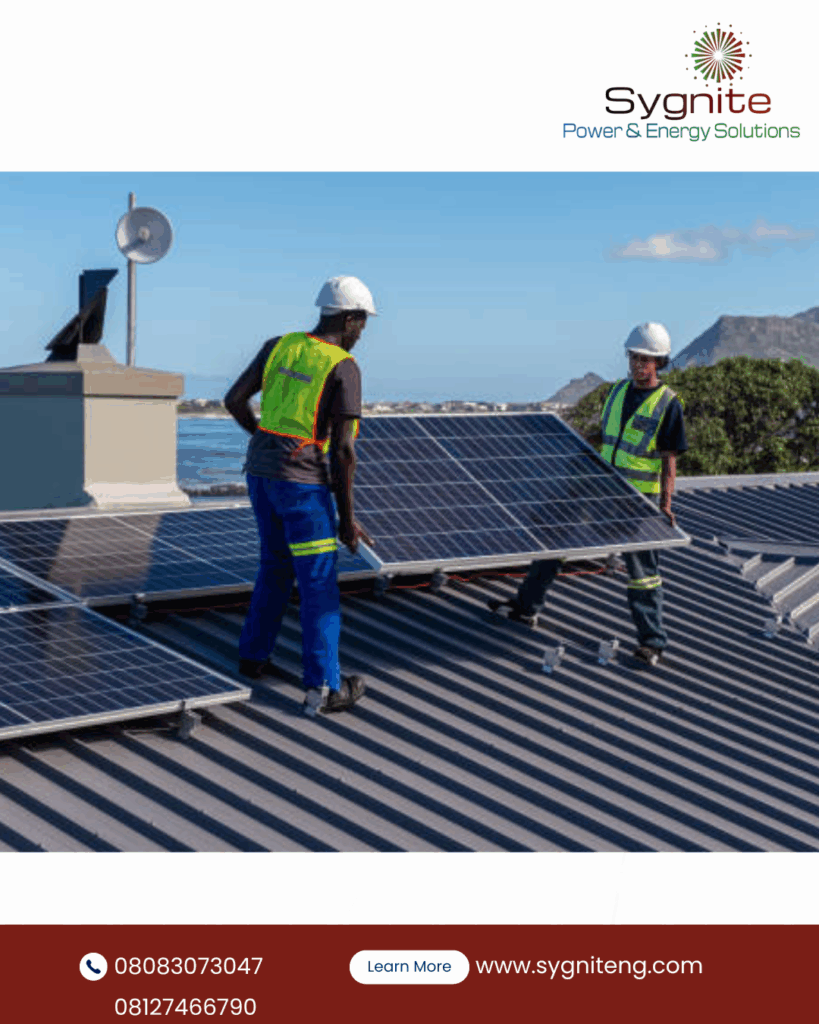 we build systems that last.