Why more Nigerians are choosing to take control of their power and their wallet.
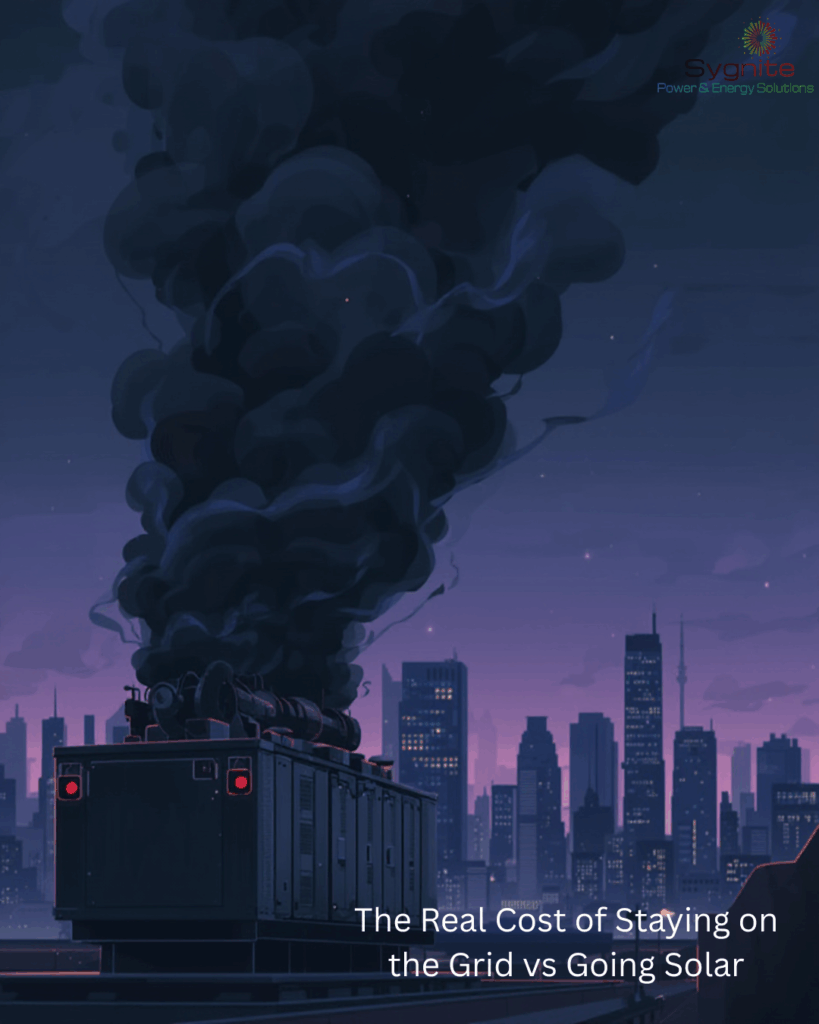
For years, many Nigerian homes and businesses have relied on a mix of the national grid and generators. But with rising electricity tariffs, erratic supply, and the increasing cost of fuel, the big question is becoming hard to ignore:
Is staying on the grid costing you more than going solar?
The answer, for most people, is yes here’s why.
1. The Hidden Cost of Staying on the Grid
On paper, grid electricity seems “cheap.” But when you break it down, staying reliant on the grid comes with several costs that aren’t always visible upfront:
• Rising Electricity Tariffs
Tariffs have increased significantly in recent years, especially for Band A customers who already face higher bills despite receiving inconsistent supply. These hikes are expected to continue as the power sector struggles to sustain operations.
• Unpredictable Outages
Businesses lose revenue and productivity during outages. Homes spend more on alternative power sources. From spoilt goods to disrupted workdays, downtime has a real financial impact.
• Generator Expenses Add Up
Staying on the grid almost always means relying on generators as backup. That comes with:
-
Fuel costs that keep rising
-
Constant maintenance
-
Noise and fumes
-
Short generator lifespan
By the time you add up fuel, repairs, and replacement costs, generators can quickly become one of the biggest expenses in a household or business.
• No Long-Term Value
The money spent on tariffs and fuel never comes back. There’s no return on investment just recurring expenses.
2. The Solar Advantage: You Pay Once, You Save for Decades
Switching to solar is often seen as expensive upfront but the long-term financial benefits far outweigh the initial cost.
• Zero Fuel, Zero Noise, Zero Stress
After installation, the sun becomes your energy source. You’re not buying fuel, and you’re not dealing with mechanical breakdowns.
• Predictable, Fixed Cost
A solar system lets you lock in your power cost today. No tariff hikes. No unexpected fuel bills. No usage surprises.
• Long Lifespan & Low Maintenance
-
Solar panels last 25+ years
-
Inverters and batteries can last 5–10 years depending on type
-
Minimal maintenance is required
This makes solar a long-lasting investment with consistent payback.
• Fast Payback Period
For many users, solar pays for itself in 2–4 years, depending on their previous generator or electricity spend.
• Increased Property Value
Homes and commercial spaces with solar installations attract higher value and better tenants.
3. Cost Comparison: Grid + Generator vs Solar
If you combine your monthly electricity bill with generator fuel and maintenance, you may be shocked by the numbers.
Grid + Generator (Typical Household or SME)
-
Monthly electricity bill: ₦30,000 – ₦120,000
-
Fuel per month: ₦40,000 – ₦200,000
-
Maintenance + repairs: ₦10,000 – ₦30,000
-
Yearly total: ₦960,000 – ₦4,200,000
After all that spending, you still don’t have guaranteed power.
Solar System (One-Time Investment)
A quality setup can range from:
-
₦1.5M – ₦6M for homes
-
₦3M – ₦20M+ for SMEs/industrial use
Once installed, your yearly cost becomes almost zero except for light maintenance.
Over a 5–10-year period, solar becomes significantly cheaper and offers more stability.
4. Beyond Money: The Lifestyle & Business Benefits
• Peace of Mind
Your power is always available. No need to run outside to start a generator or worry about fuel scarcity.
• Cleaner, Healthier Environment
Solar eliminates fumes, carbon emissions, and noise pollution in your home or business.
• Energy Independence
You’re not at the mercy of tariff hikes, fuel prices, or grid unreliability.
5. So, Is It Time to Go Solar?
If your monthly electricity and generator expenses are rising, switching to solar isn’t just an environmental choice it’s a smart financial decision.
At Sygnite, we help Nigerian homes and businesses design reliable, affordable, and scalable solar systems that match their exact energy needs.
Whether you want to cut costs, gain independence, or simply enjoy uninterrupted power, solar is the future and the future starts now.